
08 Sept 2026
A menu is an interface
A restaurant menu is not just a list of dishes. It is an interface, a promise, and often a very accurate diagnosis of how clearly a business knows what it is doing.
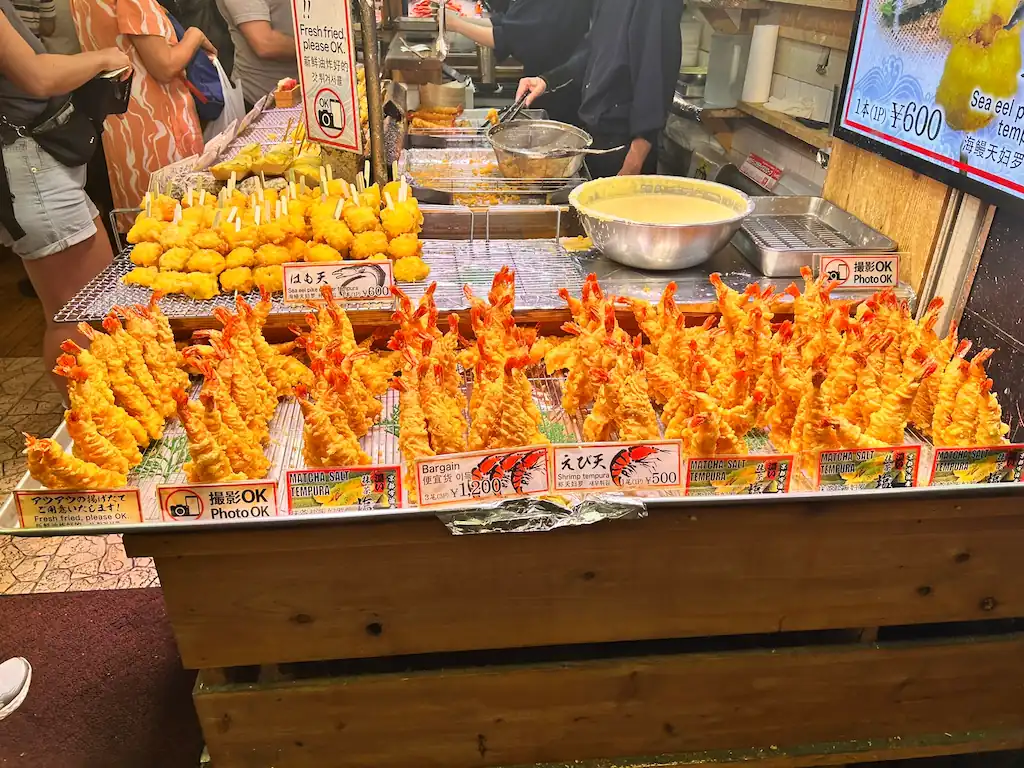
A menu is not just a list of dishes. It is an interface.
A menu tells you what kind of place you are dealing with before the food even arrives. In many cases, before you even sit down.
It tells you how a business thinks, what it believes customers want, how much confidence it has in its own offer, and whether anyone cared enough to make choosing easier. It also tells you something more practical: how much operational clarity sits behind the performance of hospitality.
That is why I have strong opinions about menus.
Not because I am a snob, and not because restaurants need to become minimalist temples with twelve seats and one offended waiter. I care because menus are one of the clearest everyday examples of how choices, systems and service design meet in public.
A menu is presentation, yes. But it is also structure. It is scope. It is prioritisation. It is expectation-setting. It is a promise the kitchen will later have to keep.
Long menus usually mean somebody refused to decide
I do not trust restaurants with huge menus.
That does not mean choice is bad. Choice can be useful. But there is a point where variety stops being a benefit and starts reading like commercial panic.
A menu with a hundred dishes is often not a sign of abundance. It is a sign that the business does not know what it wants to be, or knows perfectly well but is too scared to commit.
You see it all the time:
- pizza
- pasta
- burgers
- sushi
- steak
- random salads
- something vaguely Mexican
- something vaguely Indian
- a couple of fish dishes nobody orders
- and maybe a “chef’s special” that should have been left unmentioned
In theory it is a tour around the world. In practice it is often a guided descent into mediocrity.
The problem is not aesthetic. It is operational.
Every additional dish adds complexity:
- more ingredients
- more prep
- more storage
- more waste
- more variability
- more supplier dependency
- more room for inconsistency
- more chances to do everything passably and almost nothing properly
If you need one hundred items and each gets ordered once in a blue moon, quality becomes almost impossible to protect. At that point the menu is no longer offering freedom. It is just documenting indecision.
And indecision is expensive.
The kitchen pays for the owner’s anxiety
This is the bit people politely avoid saying.
A long menu is often the customer-facing symptom of a business that cannot commit. The owner wants to keep everything because removing anything feels risky. Maybe a regular likes one obscure dish. Maybe there is fear of “losing customers.” Maybe the logic is that if the menu covers every possible craving, nobody can object.
That sounds generous until you are the one who has to run the kitchen.
Because every dish on the menu is a promise:
- someone has to source it
- someone has to prep it
- someone has to know how to make it
- someone has to reproduce it consistently
- someone has to keep the ingredients fresh
- someone has to serve it without the whole thing collapsing into shrug-based hospitality
If the chef is also the owner, at least the person creating the problem also owns it.
If the chef is not the owner, then very often the kitchen is just paying for somebody else’s inability to choose a direction. Either the chef is trapped in a place held together by habit and emotional blackmail, or nobody involved has enough authority or backbone to say what should be obvious:
This menu is a bad idea.
That is what interests me about menus. They reveal structure. They reveal power. They reveal whether the system is clear or whether everyone is just managing the consequences of weak decisions.
Short menus are not magic. They are decisions.
I like short menus because they usually tell me one useful thing: someone decided.
Someone decided what belongs. Someone decided what does not. Someone accepted that focus is part of the experience. Someone chose to be judged on a smaller number of things and therefore had to care more about execution.
That matters.
A short menu is not a guarantee of quality. There are short menus attached to plenty of miserable food. Fast food proves that every day, often from inside a paper bag.
So this is not a religion. Short is not automatically good.
But short often signals seriousness.
My ideal menu fits on one page. A few things, done properly, that make sense together. Dishes that feel edited rather than accumulated. Seasonal changes when they make sense. Enough range to be satisfying, not so much range that the kitchen seems to be negotiating with twenty identities at once.
That is why so many great local places feel memorable with very little on offer. Some of the best Italian street food spots have three products and all three are absurdly good. Not because they lack imagination, but because they know exactly what they are doing and have repeated it enough times to refine it into something trustworthy.
A short menu says: this is who we are.
And that is far more convincing than a laminated novel full of options nobody can truly defend.
Seasonal menus only work if the place has credibility
There is one obvious objection to short, seasonal menus.
People get attached to a dish. They come back for it. If it disappears, they get annoyed.
Fair enough.
But that is not really a menu problem. It is a credibility problem.
If a place has earned trust, people are willing to try what comes next because they believe the standard will hold. If customers only trust one dish and ignore the rest, the deeper issue is not seasonality. The deeper issue is that the restaurant has failed to establish confidence beyond a single hit.
So yes, rotating menus create friction. But good places survive that friction because they have built belief. Bad places experience the same friction as a complaint because belief was never there to begin with.
Again, the menu is revealing something larger than itself.
Photos on menus are not the enemy
Food photos get dismissed too easily.
Often for good reason, to be fair. There are menus where every picture looks like it was taken under interrogation lighting in 2007 and then printed by someone with a grudge against colour. In the wrong place, menu photos make everything look cheaper, sadder and more confused than it already was.
But the photos are not the real problem.
The real problem is carelessness.
Customers are not required to be experts in every cuisine on earth. A picture can reduce uncertainty. It can help someone understand what they are ordering, how the dish is plated, what kind of portion to expect, whether it is soupy, fried, dry, sauced, or likely to arrive carrying ingredients they were not bargaining for.
A useful image makes choosing easier. That is interface design.
A dishonest or terrible image does the opposite. That is also interface design, just done badly.
So no, I do not think pictures automatically ruin menus. They only ruin menus in places that were already getting the more important things wrong. Usually that means a business that did not care enough, serving customers who have also stopped expecting much. A perfect little meeting of mutual indifference.
Congratulations to everyone involved.
Japan understood this years ago
Japan is the most interesting counterexample to Western snobbery about menu images because it takes visual expectation-setting to its logical extreme.
The resin food displays outside restaurants are one of my favourite examples of useful design in the wild. They turn the menu into a physical interface.
You do not need to guess what is coming. You can see the shape, texture, portion, ingredients, colour and general energy of the dish before you sit down. If you do not know the language well, the display still does half the work. If you are unfamiliar with the cuisine, it reduces uncertainty immediately. If you are simply choosing between three things, it makes comparison faster and easier.
That is not tacky. That is competent.
The image at the top of this note is a good example. Those shrimp looked freshly fried from a normal human distance. I only realised they were resin after getting close enough to notice that nobody was actually buying them.
That is the point. The display worked before I understood the display.
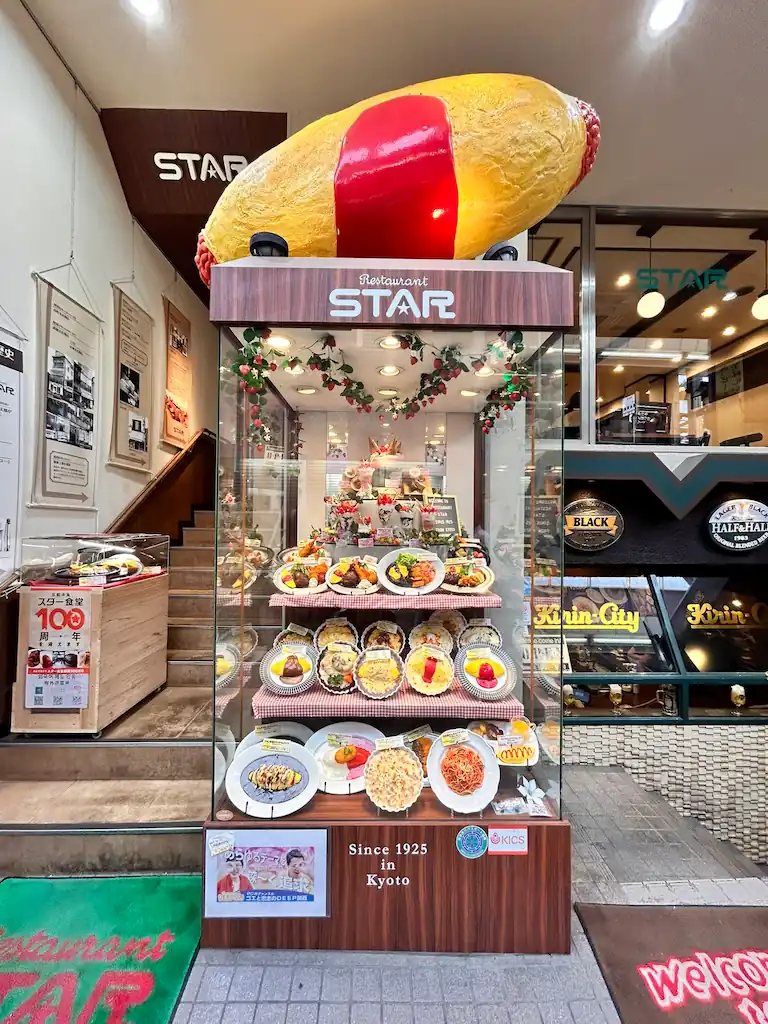
Not elegant in the European sense. Extremely clear in the useful sense. Photo by Nicolo Scarano.
It is also interesting that these displays have become something more than a service device. The miniatures are now craft objects, souvenirs, collector items, gachapon fodder and a small art form in their own right. Of course they are. Japan has a habit of taking a useful thing, refining it with absurd care, and then turning it into a parallel culture of tiny replicas.
What I like most, though, is the honesty behind them.
The display is not trying to build mystique. It is not hiding behind abstraction. It is simply saying: this is what you are about to get.
That level of clarity is rare, and not only in restaurants.
Even Da Michele makes the point
A place like L’Antica Pizzeria da Michele is useful here because it shows how powerful clarity can be when it is carried consistently.
The original Neapolitan tradition is famous for doing very little: essentially Marinara and Margherita, with the whole philosophy built around not polluting the core idea with unnecessary additions. Over time the brand expanded, franchised, modernised, and even introduced digital traceability and blockchain-backed ingredient verification in some locations, which is objectively a sentence nobody expected to read about pizza.
And yet the original point still stands.
The power was never in having more. It was in knowing what not to add.
That is what people respond to. Not theoretical purity for its own sake, but the confidence of a place that knows its own identity.
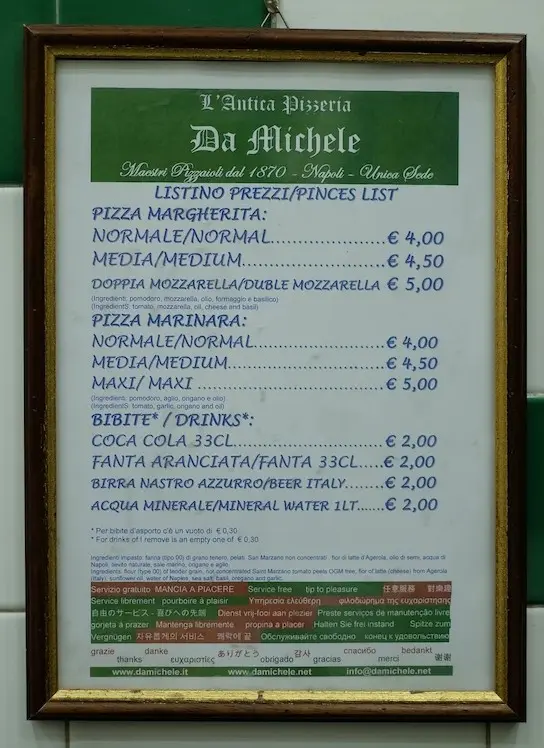
Two pizzas can be a stronger position than one hundred options nobody can defend. Photo via girlfromnaples.com.
Fast food is not a counterexample
Short menus are not the panacea.
Fast food often has relatively compact menus and still manages to feel grim. So if someone wants to object with “yes, but McDonald’s also has a short menu,” fine. That is true. The argument is not that few items automatically produce quality. The argument is that clarity is a condition for quality, not a guarantee of it.
There is still a world of difference between focused and dead inside.
Some fast food feels less like food and more like numbered inventory for people who would rather not name what they are eating out loud. “A number 4 and a number 3 meal” has always had the air of a small social pact: I will not ask questions if you will not.
Which is fine once in a while. I am not a health evangelist. If you want the occasional cheat meal, live your life.
But let us not confuse compressed industrial predictability with the kind of focus that produces care.
One is efficient because it has reduced food to a repeatable unit.
The other is focused because it has chosen to do fewer things properly.
Those are not the same achievement.
Small service failures reveal the whole system
There is another menu-related detail that tells you a lot about a place.
Everybody orders. The waiter writes it down. The food comes out. Then the waiter stands there with the plates asking:
“Who had this?”
At that point I mentally clock out.
Not because the moment is catastrophic, but because it tells me everything I need to know about the handover behind the scenes. The order was taken, but the information was not carried through the system properly. Now the customer is being asked to patch the gap.
The problem is not that one waiter forgot. The problem is that the process clearly does not care enough to remember.
Seat positions exist for a reason. Table mapping exists for a reason. Basic service choreography exists for a reason. If the final delivery still depends on guessing, then the issue is not memory. It is process design.
Again: a small detail, but small details are where systems confess.
The work version is exactly the same
This is why I find menus so useful as an example.
Teams do the same thing all the time.
They keep too much on the menu:
- too many priorities
- too many projects
- too many tools
- too many “quick wins”
- too many half-maintained processes
- too many offers
- too many things nobody wants to remove because removing them would require an actual decision
So everything stays.
Old features. Dead dashboards. Unused CRMs. Documentation nobody trusts. Bloated service offers. Workflows held together by tribal memory. Processes that still exist only because nobody wants the meeting where someone finally asks whether they should.
That is not flexibility. That is accumulation.
A team with too much on its plate looks exactly like a restaurant with too much on its menu: unfocused, overcommitted, unable to protect quality, and quietly leaking effort everywhere.
The real question
The real question is not:
How can we offer more?
That is often the easiest question in the room, because it flatters ambition while avoiding commitment.
The better question is:
What can we do well, repeatedly, and with care?
That question is harder because it demands trade-offs. It forces choice. It exposes insecurity. It makes people remove things. It asks a business to know itself.
But it is the only useful question if you want quality, coherence and trust.
That is true for restaurants. It is true for small businesses. It is true for product teams. It is true for services, workflows and operations.
A menu is never just a menu.
It is a visible version of the system behind it.
And if you read it properly, it usually tells you whether the place knows what it is doing.